The most common type: Osteoarthritis
There are hereditary forms of osteoarthritis that are caused by mutations in genes for collagen. This type of osteoarthritis can first appear at a young age, quickly causing severe damage, though not very common.Is arthritis inherited from mother or father?
If you have rheumatoid arthritis (RA) you may wonder if you inherited it from one of your parents or if you'll pass it along to your own children. Strictly speaking, neither scenario is the case: RA is not an inherited condition. However, a person's individual genetic make-up can increase the risk of developing RA.
Can you get arthritis if it runs in the family?
Risk factors for arthritis include: Family history. Some types of arthritis run in families, so you may be more likely to develop arthritis if your parents or siblings have the disorder. Age.
How do you know if you have osteoarthritis or rheumatoid arthritis?
Osteoarthritis tends to develop gradually over several years, as the joint cartilage wears away. Eventually the bones of your joints rub against each other. In contrast, the pain and stiffness of rheumatoid arthritis can develop and worsen over several weeks or a few months.
Is osteoarthritis and rheumatoid arthritis hereditary?
Various factors contribute to individuals developing OA, including increasing age, obesity, joint injuries, and a person's sex. While genetics play a role in increasing the risk of someone developing OA, this condition is not hereditary.
Help! I'm getting my mother's hands. Is arthritis hereditary?
What is the most painful type of arthritis?
Rheumatoid arthritis can be one of the most painful types of arthritis; it affects joints as well as other surrounding tissues, including organs. This inflammatory, autoimmune disease attacks healthy cells by mistake, causing painful swelling in the joints, like hands, wrists and knees.
Which arthritis is worse osteo or rheumatoid?
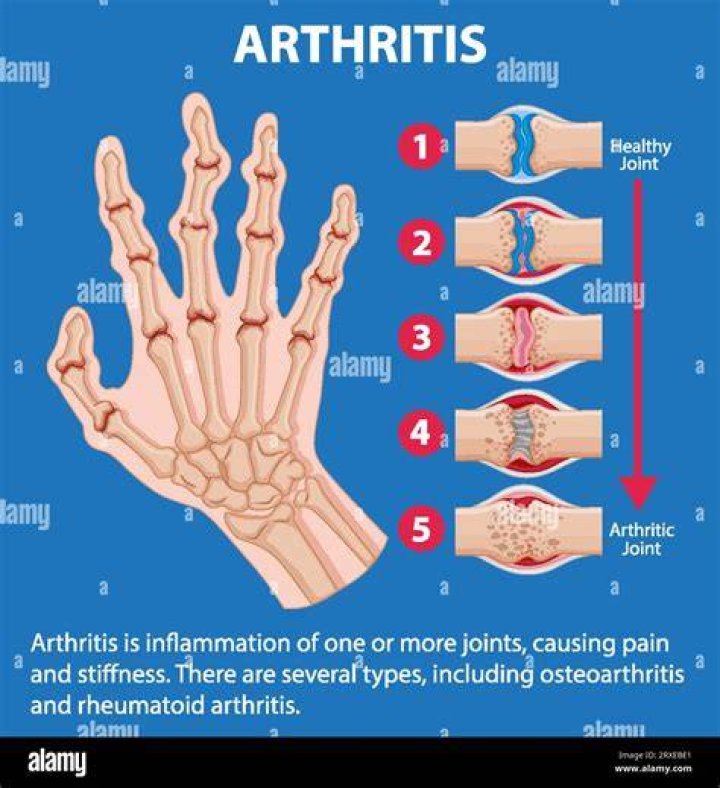
There are more than 100 types of arthritis and related diseases. Two of the most common types are rheumatoid arthritis (RA) and osteoarthritis (OA). OA is more common than RA. Both involve inflammation in the joints, but RA causes much more inflammation.
What are the 4 stages of osteoarthritis?
The main stages of OA are:
- Stage 0 (pre-osteoarthritis)
- Stage 1 (early or doubtful)
- Stage 2 (mild or minimal)
- Stage 3 (moderate)
- Stage 4 (severe)
What triggers rheumatoid arthritis flare ups?
RA flare-ups are caused by one or more triggers, including diet, stress, illness, weather changes, smoking, and overexertion. The most common signs of RA are joint pain and swelling, fatigue, and joint stiffness, especially in the morning and after sitting for long periods.
How can you tell which type of arthritis you have?
Your doctor will check for swollen joints, tenderness, redness, warmth, or loss of motion in the joints. Use imaging tests like X-rays. These can often tell what kind of arthritis you have.
At what age does arthritis usually start?
It most commonly starts among people between the ages of 40 and 60. It's more common in women than men. There are drugs that can slow down an over-active immune system and therefore reduce the pain and swelling in joints.
What are 5 symptoms of arthritis?
Early warning signs of arthritis
- Morning joint stiffness. Joint stiffness when you first wake up is often a sign of the early stages of arthritis. ...
- Joint swelling. Swollen joints are a sign that your arthritis is worsening. ...
- Fever. Rheumatoid arthritis can cause a low-grade fever. ...
- Numbness and tingling. ...
- Chronic fatigue.
What are the 3 types of arthritis?
Arthritis Types
- Osteoarthritis.
- Rheumatoid Arthritis (RA)
- Childhood Arthritis.
How can you prevent hereditary arthritis?
There's no sure way to prevent arthritis. But you can take steps to reduce your risk of stiff and painful joints as you age.
...
How to reduce your risk of arthritis
- Stay at a healthy weight. ...
- Control your blood sugar. ...
- Exercise. ...
- Stretch. ...
- Avoid injury. ...
- Quit smoking. ...
- Eat fish twice a week.
What are 3 symptoms of rheumatoid arthritis?
Signs and symptoms of RA include:
- Pain or aching in more than one joint.
- Stiffness in more than one joint.
- Tenderness and swelling in more than one joint.
- The same symptoms on both sides of the body (such as in both hands or both knees)
- Weight loss.
- Fever.
- Fatigue or tiredness.
- Weakness.
What is the life expectancy of a person with rheumatoid arthritis?
The average duration of disease were 10.5 years in male patients and 17.7 years in female. The average life span of the patients with RA, revealing 65.8 years in male and 63.7 years in female, were much shorter than of general population. The causes of all deaths were investigated by ourselves and/or autopsy.
Where does RA usually start?
The most commonly affected areas during the onset of RA are the small joints in your hands and feet. This is where you may first feel stiffness and an ache. It's also possible for RA inflammation to affect your knees and hips.
Can Covid trigger arthritis?
There are sporadic reports suggesting that some people with COVID-19 developed inflammatory arthritis as a complication of the infection. While COVID-19 survivors have reported muscle and joint pain, there have not been any studies showing that these individuals demonstrated markers of inflammatory arthritis.
Why is rheumatoid arthritis worse at night?
One theory is that the body's circadian rhythm may play a role. In people with rheumatoid arthritis (RA), the body releases less of the anti-inflammatory chemical cortisol at night, increasing inflammation-related pain.
What is difference between arthritis and osteoarthritis?
The main difference between osteoarthritis and rheumatoid arthritis is the cause behind the joint symptoms. Osteoarthritis is caused by mechanical wear and tear on joints. Rheumatoid arthritis is an autoimmune disease in which the body's own immune system attacks the body's joints. It may begin any time in life.
What should you not do with osteoarthritis?
Osteoarthritis (OA) is the most common form of arthritis in the United States.
...
5 Foods to Avoid
- Red meat and fried foods. Fried foods and red meat contain high levels of advanced glycation end products (AGEs), which are known for stimulating inflammation. ...
- Sugars. ...
- Dairy. ...
- Refined carbohydrates. ...
- Alcohol and tobacco.
Does osteoarthritis qualify for disability?
If you have been diagnosed with osteoarthritis and it has impacted your ability to work, you may qualify for Social Security Disability benefits. Osteoarthritis results in the gradual loss of cartilage from your joints. A tough tissue that provides the cushioning between the bones that form the joints, it is needed.
What is the rarest form of arthritis?
Palindromic rheumatism (PR) is a rare type of inflammatory arthritis. Between attacks of joint pain and swelling, the symptoms disappear, and the affected joints go back to normal with no lasting damage.
What does RA pain feel like?
A person with RA may feel intense pain in their joints during flares. This may feel like sustained pressure, a burning sensation, or a sharp pain. However, people with RA may also experience periods of remission when they feel few to no symptoms. In addition to causing pain in the joints, RA can affect the whole body.
Does osteoarthritis hurt all the time?
Osteoarthritis is a degenerative disease that worsens over time, often resulting in chronic pain. Joint pain and stiffness can become severe enough to make daily tasks difficult. Depression and sleep disturbances can result from the pain and disability of osteoarthritis.