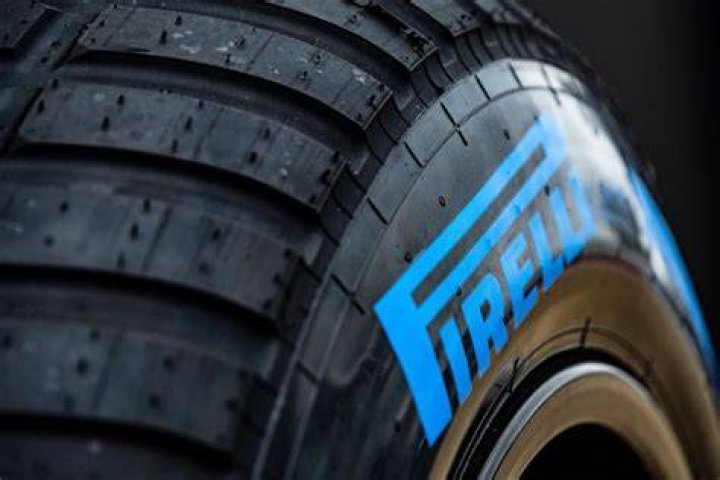
What are F1 wet tires?
The full wet tires are the most effective for heavy rain. These tires can evacuate 85 litres of water per second per tire at 300kph: when it rains heavily, visibility rather than grip causes issues. The profile has been designed to increase resistance to aquaplaning, which gives the tire more grip in heavy rain.
What are the different types of tyres in F1?
Formula 1 tyres
F1 uses seven different tyre compounds which comprise five slick variations, an intermediate and wet weather tyre. Three of the slick tyres are available per race, labelled as soft, medium and hard and each car must run at least two of those tyres during a dry race.
Why do F1 Tyres look wet?
But why are FORMULA 1 tyres shiny? Due to the moulds used by Pirelli in the manufacturing process, tyres come out shiny. As Head of Motorsport Mario Isola explains, this shine only lasts while the car traverses the pit lane, and is quickly scrubbed off. “We are using new moulds that have chrome treatment.
Do F1 drivers pee?
F1 drivers do pee during races if they want to, and many have admitted to doing so in the past. But many drivers choose not to, and they don't always need to anyway. Most F1 drivers will pee before they race, but hydration is a key issue and so they need to drink a lot of water.
F1 teams think Mercedes and Lewis Hamilton CHEATED in Canada, here's WHY
Why are Pirelli F1 tires so shiny?
Formula 1 tires are so shiny because of the molds that Pirelli uses, which are now are lined with chrome which causes the very shiny surface that the tires have when first fitted to the car. The shiny surface is not reflective of the grip or consistency of the tire and disappears on the first lap.
How many sets of wet tyres do F1 teams get?
Competitors are allowed only a limited number of tyre sets during a race event: 13 dry, 4 intermediate, 3 wet. Each tyre must be marked with a unique identifier for tracking and scrutinising during a race event.
What is slipstream in F1?
'Slipstreaming' occurs when a car is behind another down a straight. 'The lead car produces circulation behind the car as it produces downforce, this generates an area of lower pressure behind the car,' explains Jack Chilvers, aerodynamicist at Williams F1 Racing.
Which tyre is fastest F1?
C5 is the Compound 5 tire. It is the quickest compound that Pirelli has in its arsenal. This tire can run on all circuits that require high speed. As these tires are the fastest available tires, they are the least durable tires and develop graining quite quickly.
What is purple tire in F1?
Ultrasoft Purple
The ultrasoft is not quite a qualifying tire, but it's moving in that direction, with some interesting potential applications for it available as well during races. Its purple markings were chosen as the result of an innovative social media campaign, with fans voting for their preferred colour.
Can I buy a F1 tyre?
You won't get a tyre. When the race weekend is over, all of the tyres are returned to Pirelli, who take them back to their factory and run a diagnosis on them to make sure there are no defects in them; they usually get destroyed or put into storage to keep them from being acquired by rival tyre developers.
Why F1 car tyres are smooth?
'Slick' tyres were introduced into F1 racing in the late 1960s. Slick tyres do not have any grooves or patterns on them. Due to this, more surface area is in contact with the track surface and the result is better grip. Slicks were used till 1997.
Do F1 tires have air?
Formula one tyres are not like road tyres, F1 tyres are filled with nitrogen instead of air. The air which we use to fill our car tyres is a mixture of 78 percent nitrogen but significantly it has 21 percent oxygen.
What are backmarkers in F1?
Backmarker. A term used to describe a driver at the rear end of the field, often when he is encountered by the race leaders. Blue flags are used to inform the backmarker when he should let a faster car past.
Is tow the same as slipstream?
Slipstreaming is sometimes referred to as 'getting a tow', or 'distant tow'. At certain tracks teammates take turns being the lead driver in qualifying, giving the car behind an advantage that can sometimes be worth several tenths of a second.
Is Dirty air a slipstream?
Slipstream occurs when a car is behind another down a straight. Meanwhile, dirty air occurs in the corners, where the cars are already in a grip limited condition.
How much does a F1 tire cost?
Formula 1 selects three sets of slicks from a bank of five different compounds for each race. Tires cost around $3,000. During a single race, a team can go through many sets of tires, depending on conditions. Dry tires, wet tires, and intermediate tires are always on standby for various weather conditions.
Why did old F1 tires have grooves?
Formula 1 got rid of the 'slicks' and re-introduced 'grooved' tyres. The sole purpose of the move was to curb the increasing cornering speeds. Those grooved tyres had three parallel grooves in the front tyres and four parallel grooves in the rear tyres.
Can F1 tires be reused?
F1 tires for an F1 car are only designed to be used for one stint of an F1 Grand Prix and cannot be reused after that. Once a tire wears out, the tire wear starts affecting the car's performance and consequently causes the car to lose grip on the track causing the car to slow down tremendously.
Why are F1 drivers weighed?
It's important that F1 drivers are weighed before and after they take part in a race. And the reason why is fairly simple: they need to ensure they haven't lost too much weight during it. Yep, F1 drivers shed those pounds during their two-hour races through sheer sweat alone.
Do F1 cars have brake lights?
There are no brake lights on Formula 1 cars. A brake light would be a waste of space on a Formula 1 car due to the extreme speeds they run at. When driving at these high speeds, it would be very hard to stop in time to avoid a collision with another car.
What is a shunt in F1?
Shunt — F1 terminology for an accident or crash (“wreck” in American NASCAR parlance) involving one or more cars.
Are F1 tyres bald?
F1 tires have no treads because it provides a better grip with the track surface in dry conditions. Better grip makes the car more stable, which is vital in a sport like F1. However, in rainy conditions, teams will often opt for tires with treads. F1 tires have no treads because it improves their ability to race.
Why do F1 cars not refuel?
F1 cars have not refueled since 2010 when the FIA decided to ban them to reduce the cost and increase safety. Currently, the cars start the race with a full tank, and the drivers must manage the fuel well so that they do not run out before crossing the finish line.